The Texas Commission on Environmental Quality (TCEQ) has posted a warning. Some Texas water systems affected by the January 2026 winter storm have boil water notices.
If affected, boil water before using for drinking, cooking, brushing teeth, pet water, baby formula, or making ice. Bathing is ok but don’t swallow water; dishwashers/laundry are safe if conditions met.
How do I boil my water – Heat to rolling boil for 2 minutes, cool, store in covered container.
What should I boil my water for – Boil water before using it for drinking or cooking. It should also be boiled for brushing teeth, pet water, baby formula, or making ice.
Extra Considerations – Be careful not to swallow any water when bathing or showering. Household dishwashers are safe to use if the water reaches at least 150 degrees. They are also safe if they have a sanitizing cycle.
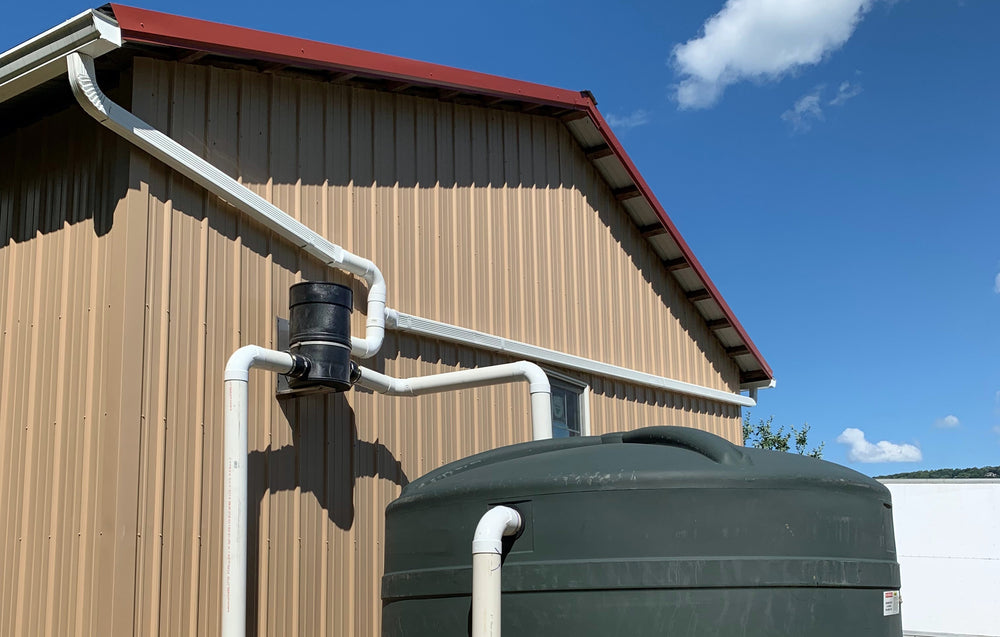
Rainwater systems can be designed from a simple households to complex industrial setup for soft water requirement. It’s all as per your requirement and budget.
However, if your goal is to collect soft water from rainfall, for drinking, gardening, washing and other activities, you can browse and read weblinks mentioned in sitemap. It can help you easily learn, assemble and how to harvest rainwater. FAQ’s on Rainwater Harvesting – https://rainwater.blog/2024/04/09/faqs-on-rainwater-harvesting/
Trees capture carbon dioxide (CO₂) from the atmosphere through photosynthesis, storing carbon in their biomass (trunks, branches, leaves, roots) and releasing oxygen. This process makes them critical natural tools for mitigating climate change. Here’s a concise breakdown:
How it works: Trees absorb CO₂ via leaves, converting it into glucose and oxygen using sunlight. The carbon is stored in wood, bark, and roots, with some transferred to soil via roots and decaying matter.
Capacity: A mature tree can absorb ~48 pounds (22 kg) of CO₂ per year, though this varies by species, age, size, and environment. For example, fast-growing species like pines or poplars can sequester more carbon than slower-growing oaks in the same timeframe.
Factors affecting capture:Species: Hardwoods (e.g., oak, maple) store more carbon long-term due to denser wood; conifers grow faster but may store less over time. Age: Young trees grow faster and absorb more CO₂ initially, but older trees store more total carbon due to their size. Location: Trees in tropical regions often sequester more due to year-round growth, compared to temperate regions with seasonal limits. Health: Healthy trees with ample water and nutrients capture more CO₂ than stressed ones.
Global impact: Forests globally absorb 15-30% of human-related CO₂ emissions annually (7.6 billion metric tons). Deforestation, however, releases stored carbon, offsetting this benefit.
Soil storage: Trees also contribute to carbon storage in soil through root systems and decomposing organic matter, which can hold carbon for centuries.
Limitations: Trees alone can’t offset all emissions. Space constraints, land use competition, and risks like wildfires or pests limit their scalability. Plus, carbon stored in trees can be released if they’re cut down or die prematurely.
The post highlights a humorous Dilbert comic by Scott Adams displayed at the IUFRO 2024 conference, satirizing corporate innovation by suggesting a tree as an “effective product,” which aligns with the event’s focus on carbon capture by trees.
Best Tree Species for Carbon Capture: The best species for carbon capture depend on growth rate, wood density, and longevity, as these affect how much carbon is absorbed and stored over time.
Here are top performers: Fast-growing species (high CO₂ absorption in shorter timeframes): Hybrid Poplar: Absorbs ~100-200 pounds of CO₂/year during peak growth due to rapid biomass accumulation. Ideal for temperate regions but needs water and fertile soil.
Pines (e.g., Loblolly Pine): Sequesters ~50-100 pounds of CO₂/year. Grows fast in warmer climates like the southeastern U.S., with dense planting boosting capture.
Eucalyptus: In tropical / subtropical regions, some species absorb up to 200 pounds of CO₂/year due to rapid growth. Common in Australia, parts of Africa, and South America.
Long-term storage species (dense wood, slower growth): Oak (e.g., Quercus robur): Stores more carbon over decades due to dense wood (~50-80 pounds CO₂/year for mature trees). Great for temperate regions like North America and Europe.
Sequoia/Redwood: Massive size and longevity make these trees carbon storage giants, holding thousands of pounds of carbon over centuries, though growth slows with age.
Teak: In tropical regions, teak’s dense wood locks away carbon for decades, with ~50-100 pounds CO₂/year during growth.
Considerations: Fast-growers like poplar or eucalyptus are great for quick carbon sequestration but may need replacement after 20-50 years. Long-lived species like oaks or sequoias store carbon for centuries but grow slower initially. Native species are often best to ensure ecosystem compatibility.
Regional Differences: Carbon capture varies by climate, soil, and growing season: Tropical regions (e.g., Amazon, Southeast Asia):Year-round growth leads to higher annual CO₂ absorption (~20-30% more than temperate regions). Example: Tropical hardwoods like mahogany or fast-growing bamboo can sequester 100-300 pounds of CO₂/year per tree in ideal conditions. Challenge: Deforestation risks releasing stored carbon.
Temperate regions (e.g., North America, Europe):Seasonal growth limits annual sequestration, but diverse species like maples, pines, or birches thrive. Average absorption: ~30-60 pounds CO₂/year per mature tree. Soil carbon storage is significant due to cooler, stable soils.
Boreal regions (e.g., Canada, Siberia):Slower growth due to short seasons, with species like spruce or fir absorbing ~20-40 pounds CO₂/year. Vast forest areas make boreal forests globally significant, but warming climates increase wildfire risks, releasing carbon.
Arid regions (e.g., parts of Africa, Australia):Limited water reduces growth rates, but drought-tolerant species like acacias can still sequester ~10-30 pounds CO₂/year. Reforestation here is challenging but impactful due to low baseline vegetation.
Calculation for a Specific Area: Let’s calculate carbon capture for a 1-hectare (2.47 acres) forest in a temperate region (e.g., northeastern U.S.) planted with hybrid poplars, assuming optimal conditions: Tree density: ~1,000 trees per hectare (common for fast-growing plantations). CO₂ absorption per tree: ~100 pounds (45 kg) per year for young hybrid poplars (conservative estimate for 5-10-year-old trees). Total CO₂ per hectare: 1,000 trees × 100 pounds = 100,000 pounds (45,359 kg or ~45 metric tons) of CO₂ per year. Context: This equals the annual emissions of ~4-5 average U.S. cars (assuming ~9 tons CO₂ per car/year). Over 20 years, this hectare could sequester ~900 tons of CO₂, assuming trees remain healthy and aren’t harvested.
For comparison: In a tropical region with eucalyptus at similar density, you might see ~60-80 tons of CO₂ per hectare/year due to faster growth. In a boreal forest with slower-growing spruce, it might drop to ~20-30 tons/year.
Notes and Caveats Maintenance: Carbon capture assumes healthy trees. Pests, drought, or poor soil can reduce sequestration by 20-50%. Lifespan: If trees are harvested or die, stored carbon may be released unless wood is used in long-term products (e.g., furniture). Soil Carbon: In temperate regions, soil can store 10-20% of the carbon trees sequester, increasing total impact.
Scalability: Planting enough trees to offset global emissions (e.g., 36 billion tons CO₂ / year) would require billions of hectares, competing with agriculture and urban land use.
Further reading: https://share.google/GSN6knrnXgCRkYyPh “Cost effective CO2 reduction in the Iron & Steel Industry by means of the SEWGS technology: STEPWISE project”.
Note: The Dilbert comic by Scott Adams is a genius commentary on corporate innovation. By suggesting a tree as an “effective product” for carbon capture, Adams pokes fun at how companies often try to spin simple solutions as groundbreaking products. It’s fitting for the IUFRO conference, which highlights the importance of trees in capturing carbon dioxide and mitigating climate change. Trees are indeed effective at absorbing CO2, making them a valuable tool in the fight against climate change.
RO (ReverseOsmosis) water purifiers are highly effective at reducing pesticides in water, typically removing 90–95% of them.
Drinking RO water can provide potential health advantages by reducing exposure to harmful substances. The improved water quality may contribute to better overall health outcomes, making RO systems a valuable choice for households seeking safer drinking water.
About my experience – I am happy with performance AO Smith ProPlanet P7 model that I installed recently. The water taste has improved as compared to my potable water supply. Liquid based drinks like coffee and tea taste has improved.
AO Smith water treatment products are available at retailers nation wide in US. Others can search in Amazon.
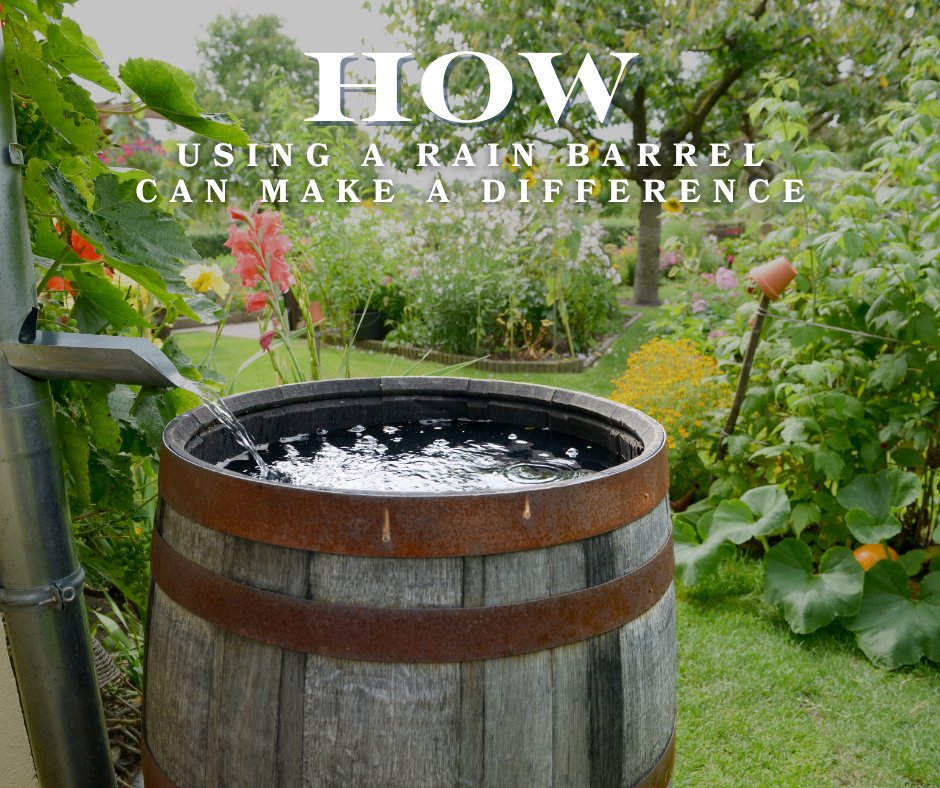
Rain barrels reduce surface runoff water pollution by capturing and containing rainwater, decreasing the total amount of runoff water.
Less runoff means water can seep back into the ground slowly, reducing the amount of polluted water that runs into rivers and streams, which ultimately conserves bodies of water.
Average roof collects 600 gallons of water for every inch of rain.
Capturing some of that stormwater could play an important role in protecting our freshwater resources.
Rain barrels are one simple first step that can set small business owners, schools, home owners, and corporations down the path of freshwater conservation.
Rain barrels can not only help save money on municipal water bills but they can also reduce erosion and flooding caused by turbulent stormwater runoff.
Collecting rainwater in barrels is a cheap and easy way to reduce stormwater runoff.
Some other options for a one-inch rain event, even on a small 8′ x 10′ roof area can fill up 50 gallon rain barrel–that is a lot of water that does not become runoff.
Rain barrels range in size from 30 gallon to 100 gallon containers.
Installing them is easy and requires no special tools to set up at your business, home, or school.
There are numerous tutorials and guidelines available online that can answer specific questions and provide creative ideas on how to decorate your barrel to make it visually attractive.
So what can you do with all this rainwater that collects in the barrels?
Water your plants, water a composter, or wash your car to repurpose the water.
If you’ve collected more water than you can use, just release it on a sunny day when the ground is dry and the water will be absorbed. Plants will love this water! Using this recovered water for landscaping helps conserve potable water and will result in money savings.
Interested in learning more? Here are some additional resources:
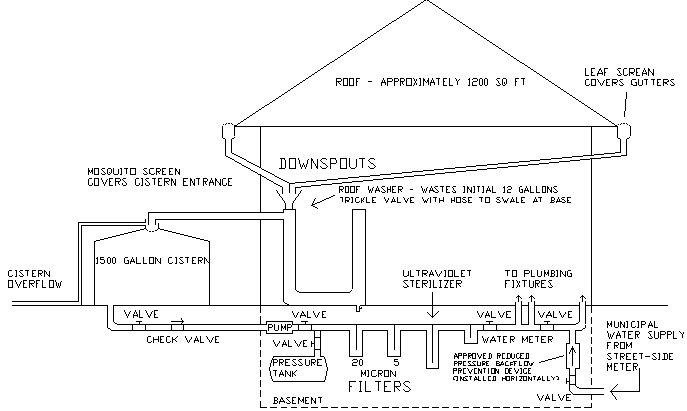
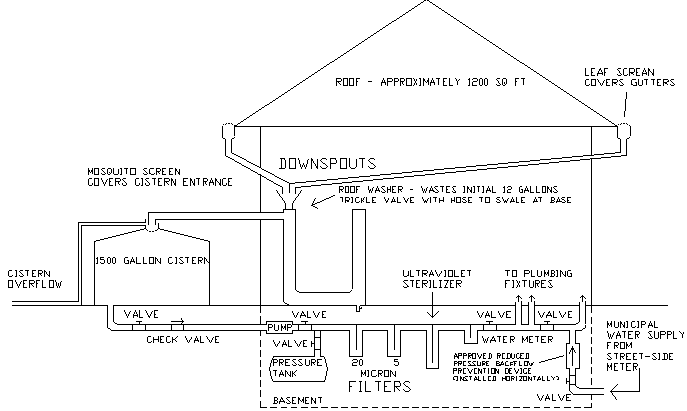
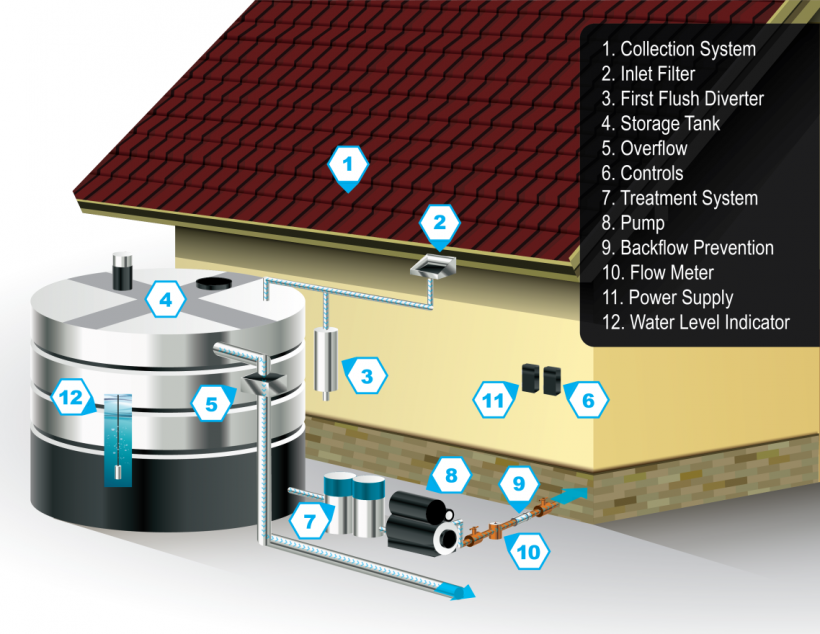
The major components of a rainwater harvesting system
The major components of a rainwater harvesting system
Collection system: Roof surface and gutters to capture the rainwater and send it to the storage system
Inlet filter: Screen filter to catch large debris
First flush diverter: Diverter that removes debris not captured by the inlet filter from the initial stream of rainwater
Storage tank: Storage tanks composed of food-grade polyester resin material approved by the U.S. Food and Drug Administration (FDA), which is green in color and helps to reduce bacterial growth
Overflow: Drainage spout that allows for overflow if the storage tank gets full
Controls: Control system that monitors water level and filtration system
Treatment system: Filtration and disinfection system that treats the water to non-potable or potable standards
Pump: Pump to move water through the system to where it will be used
Backflow prevention: Backflow preventer to ensure that under negative pressure water cannot flow backwards through the system into the make-up water system
Flow meter: Flow meter (with data logger) to measure water production
Power supply: Systems may use either conventional power sources or, to improve off-grid capabilities, alternative sources such as stand-alone or grid-tied solar systems
Water level indicator: Monitors the water level in the storage tank.
Mole drainage, on the right soil type and when installed correctly, can help reduce waterlogging problems substantially.
Mole drainage is widely used in New Zealand and the United Kingdom in heavy soils to improve productivity of pastures and crops. Mole drainage was popular with dairy farmers in the 1960s in Victoria but these often failed due to reasons now more fully understood. Recent research has resulted in robust guidelines for installing mole drains so they are more effective for longer, with a greatly reduced failure rate.
What is a mole drain?
Mole drains are unlined channels formed in clay subsoil. They’re formed by pulling a ripper blade (or leg) with a cylindrical foot (or torpedo) attached on the bottom through the subsoil. A plug (or expander) is often used to help compact the channel wall. The foot is usually chisel-pointed and the entire point is hard-faced by welding. More frequent hard-facing of the underside will increase the effective life of the torpedo. The beam is the main rail that carries the leg and torpedo.
Mole drains are used in heavy soils where a clay subsoil near moling depth (400 to 600cm) prevents downward movement of ground water. Mole drains are a more sophisticated drainage system than open drains. Mole drains do not drain groundwater but remove water as it enters from the ground surface.
Mole drains over a collector pipe system
A mole drain over a collector pipe system is recommended in:
soils where mole drains would have a very short lifespan due to sandy or stoney areas
heavy clay type soils, or
lengths greater than about 80 metres to reach an outfall
This system requires the installation of slotted subsurface drainage pipes at approximately 60m to 100m apart, across which mole drains are pulled. This system is useful where soil may contain stones or sandy patches in the profile, at drainage depth, which could collapse when moled. The relatively close spacing of the pipes and shorter mole drain lengths will minimise the area affected by the resultant poor drainage when the mole drain collapses.
Permeable backfill such as washed sand, small screenings or small diameter ‘pea’ gravel is placed (backfilled) on top of the slotted pipe in the base of the trench. The collector pipe will have been installed using a laser to ensure a constant fall in the pipe to the outfall. Depending on the clay content and its depth, this backfill must reach at least 150mm above the moling depth so that the water moves into the backfill via the mole channel.
Mole drains are then installed at an angle (often 70 to 900) to the direction of the pipes. Excess ground water flows into and along the mole drains, then drains into the porous backfill above the pipes, and is then quickly removed to outfalls via the subsurface collector pipes.
Mole Plough
Mole ploughing is a method of deep tillage used in agriculture to break up compacted soil and improve drainage. It involves the use of a machine called a mole plough, which creates a vertical channel or “mole” in the soil by pushing a blade through the earth.
The process of mole ploughing typically involves the following steps:
Preparation: Before starting the mole ploughing process, the field is usually ploughed or disked to remove any surface debris and loosen the topsoil.
Equipment Setup: The mole plough is attached to a tractor and adjusted to the desired depth and angle of operation.
Soil Penetration: The mole plough blade is then lowered into the soil and pulled through the earth by the tractor. As the blade moves through the soil, it creates a vertical channel or mole that can be up to 1m deep.
Soil Fracturing: As the mole plough moves through the soil, it fractures and loosens the soil around the channel, creating pockets of air and allowing for better water penetration and drainage.
Incorporation: Some mole ploughs are equipped with a device that can add organic matter, such as compost or manure, to the channel as it is being created. This helps to improve soil fertility and structure.
Soil Closure: Once the mole plough has created the channel, the soil is allowed to settle and the channel is gradually closed by the surrounding soil.
Mole ploughing is an effective method for improving soil structure and reducing compaction, which can lead to increased crop yields and improved soil health over time. However, it should be used with caution, as excessive deep tillage can also disrupt soil ecosystems and lead to soil erosion.
How to mole plough for optimum benefits. Mole drainage, when completed correctly on the right type of soil type can assist in reducing problems of waterlogging. To help farmers get the most from the process there is a need for farmers to understand how to mole plough and construct effective mole drains.
Wet winter soils are a common problem in parts of the United kingdom and surface drainage has potential to improve the situation by removing excess surface water. For greatest impact the profile of the soil profile needs to be drained so that crops and pastures have the capability to reach their potential and stock damage through compaction and treading can be reduced.
Mole drainage is widely used on heavy soils to improve productivity of pastures and crops in this article we consider How To Mole Plough … Further Reading https://bdolphin.co.uk/news/mole-plough/
Farming equipments – https://claydondrill.com/company-history/ . The Claydon family have farmed the heavy clay lands of Suffolk, in the east of England, since the early 1900s. Jeff and Frank Claydon have been farming since 1970 and are the third generation to do so under the E.T. Claydon & Sons partnership.
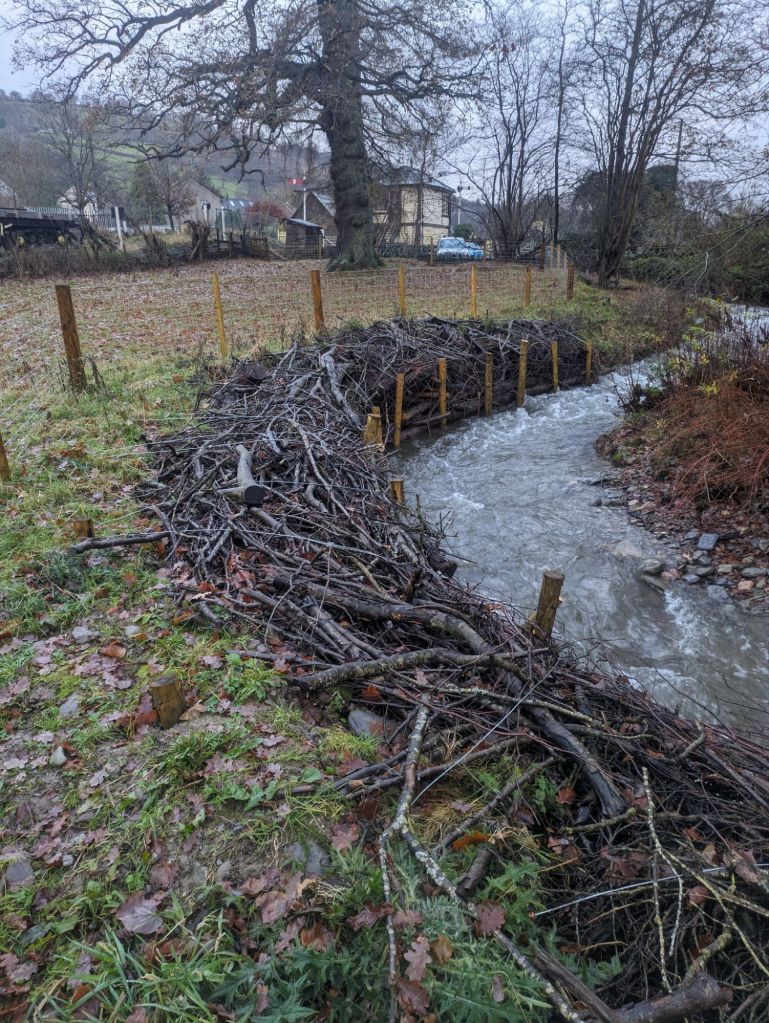
Peter Powell – photo of one of our habitat restoration sites from last week. The brash is pinned in to stop erosion of the bank but will also provide homes for invertebrates and cover for fish. Willow is included, this will sprout into new trees to make the structure alive and permenant.
Water pollution is a growing crisis around the world, but one city in Australia is doing its part to tackle the huge surges of waste that come from stormwater drains. By using a somewhat obvious, simple and cost-effective system of nets, or “trash traps,” the City of Kwinana is… pic.twitter.com/YfGvQ2pSAR
The cost of repairing corrosion worldwide is estimated at $2.5 trillion a year, which is more than 3% of the global GDP—so developing better ways to manage oxidation would be an economic boon.
New research examines #corrosion on atomic level The cost of repairing corrosion worldwide is estimated at $2.5 trillion a year, which is more than 3% of the global GDP – so developing better ways to manage oxidation would be an economic boon.












 Raincentre's Blog