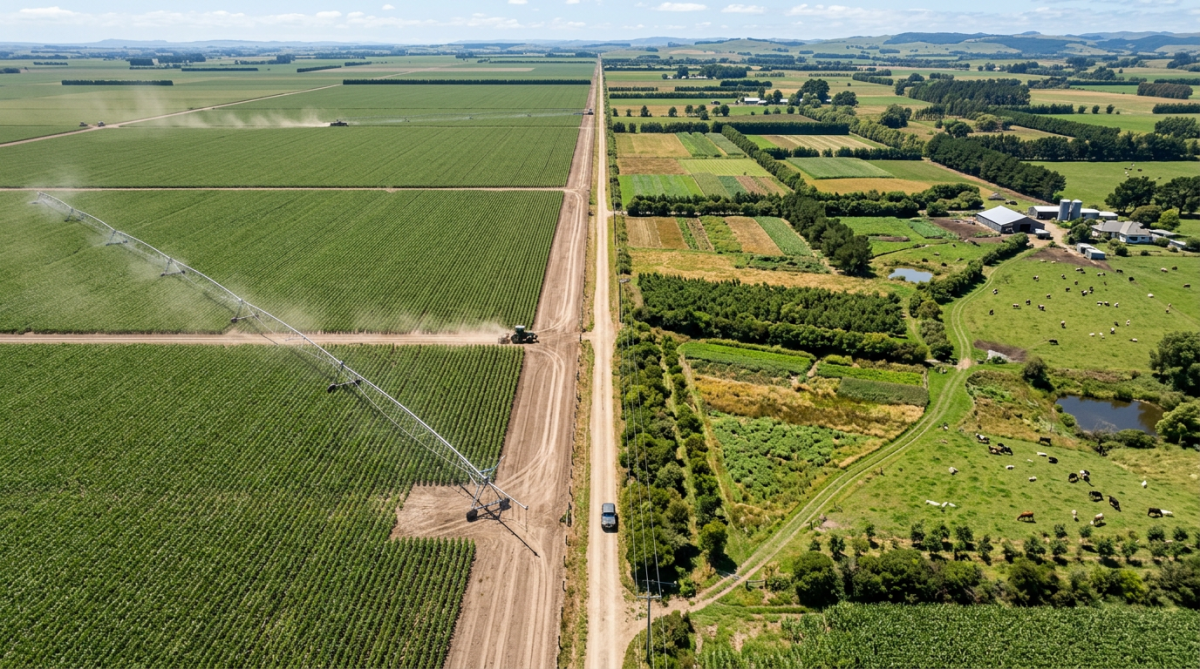
Industrial farming is degenerative – it depletes soil, reduces biodiversity, and damages water systems. Regenerative farming does the opposite: it actively rebuilds soil health, increases life in the ecosystem, and produces nutritious food while protecting natural resources.
Regenerative agriculture is the next stage beyond organic farming – not just avoiding chemicals, but actively restoring the land.
Key Practices Recommended for Regenerative Agriculture
| Practice | What it involves | Why it matters |
| Maximize Photosynthesis | Keep living plants covering the soil as much of the year as possible. | Living plants capture carbon dioxide and turn it into soil organic matter. |
| Maintain Ground Cover | Use cover crops, green manures, and avoid leaving bare soil. | Protects soil from erosion, reduces weeds, and feeds soil biology. |
| Build Soil Organic Matter | Compost, longer crop rotations, organic fertilizers, limited tillage. | Improves fertility, structure, and the soil’s ability to hold water. |
| Increase Water-Holding Capacity | Focus on healthy soil with high organic matter. | Soil acts like a sponge – better drought resistance and less runoff (excellent synergy with rainwater harvesting). |
| Build Functional Biodiversity | Diverse plants, beneficial insects, microbes, and livestock where appropriate. | Creates a resilient, self-regulating ecosystem. |
| Shift from Inputs to Knowledge | Rely less on synthetic fertilizers and pesticides; use observation, measurement, and biological processes. | Reduces costs and environmental harm while improving long-term productivity. |
| Minimize Soil Disturbance | Use reduced or no-till methods and avoid unnecessary ploughing. | Preserves soil structure, protects organic matter, and supports soil biology. |
Healthy soil that holds more water works especially well with rainwater harvesting systems.:
Free FAO resources:
1. The 10 Elements of Agroecology (short overview, 15 pages): The 10 elements of agroecology .
2. Voluntary Guidelines for Sustainable Soil Management (practical principles): Voluntary Guidelines for Sustainable Soil Management .
3. FAO also has technical manuals on recarbonizing soils (search “Recarbonizing global soils” on openknowledge.fao.org) for deeper practice details.
Further reference:
1. Soil and Water Conservation Allen County: https://rainwater.blog/2022/02/14/soil-and-water-conservation-allen-county/ .
2. Contour: https://rainwater.blog/2024/05/14/contour/ .
Rainwater Blog Sitemap: https://rainwater.blog/sitemap/

