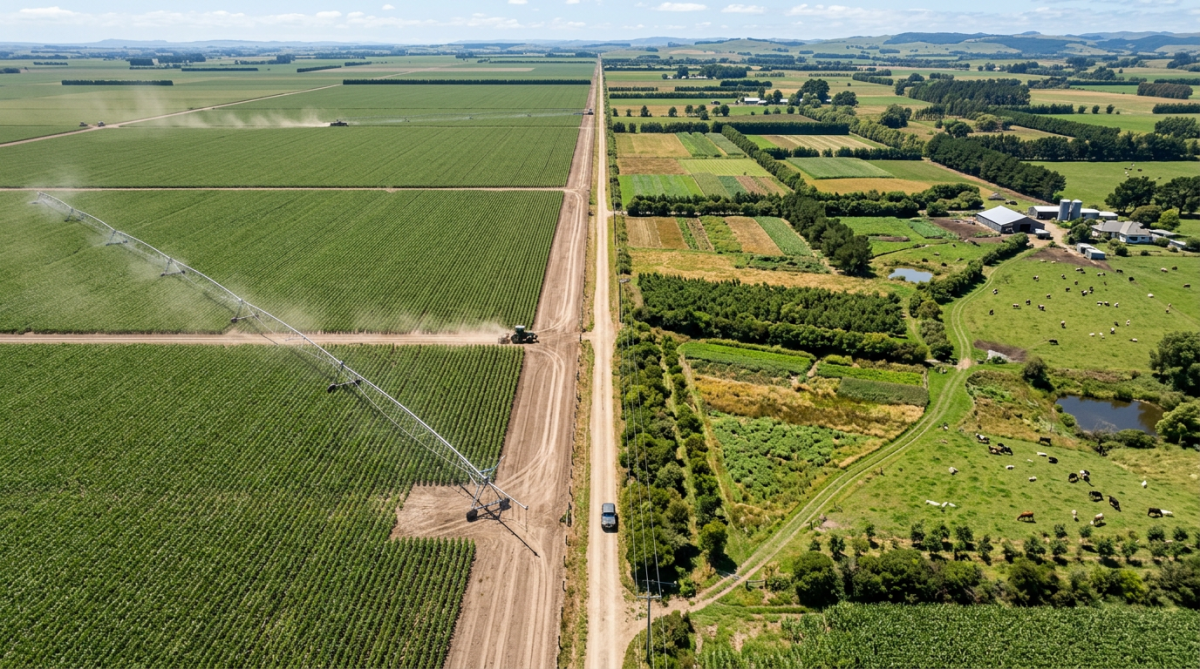
Industrial farming is degenerative – it depletes soil, reduces biodiversity, and damages water systems. Regenerative farming does the opposite: it actively rebuilds soil health, increases life in the ecosystem, and produces nutritious food while protecting natural resources.
Regenerative agriculture is the next stage beyond organic farming – not just avoiding chemicals, but actively restoring the land.
Key Practices Recommended for Regenerative Agriculture
| Practice | What it involves | Why it matters |
| Maximize Photosynthesis | Keep living plants covering the soil as much of the year as possible. | Living plants capture carbon dioxide and turn it into soil organic matter. |
| Maintain Ground Cover | Use cover crops, green manures, and avoid leaving bare soil. | Protects soil from erosion, reduces weeds, and feeds soil biology. |
| Build Soil Organic Matter | Compost, longer crop rotations, organic fertilizers, limited tillage. | Improves fertility, structure, and the soil’s ability to hold water. |
| Increase Water-Holding Capacity | Focus on healthy soil with high organic matter. | Soil acts like a sponge – better drought resistance and less runoff (excellent synergy with rainwater harvesting). |
| Build Functional Biodiversity | Diverse plants, beneficial insects, microbes, and livestock where appropriate. | Creates a resilient, self-regulating ecosystem. |
| Shift from Inputs to Knowledge | Rely less on synthetic fertilizers and pesticides; use observation, measurement, and biological processes. | Reduces costs and environmental harm while improving long-term productivity. |
| Minimize Soil Disturbance | Use reduced or no-till methods and avoid unnecessary ploughing. | Preserves soil structure, protects organic matter, and supports soil biology. |
Healthy soil that holds more water works especially well with rainwater harvesting systems.:
Free FAO resources:
1. The 10 Elements of Agroecology (short overview, 15 pages): The 10 elements of agroecology .
2. Voluntary Guidelines for Sustainable Soil Management (practical principles): Voluntary Guidelines for Sustainable Soil Management .
3. FAO also has technical manuals on recarbonizing soils (search “Recarbonizing global soils” on openknowledge.fao.org) for deeper practice details.
Further reference:
1. Soil and Water Conservation Allen County: https://rainwater.blog/2022/02/14/soil-and-water-conservation-allen-county/ .
2. Contour: https://rainwater.blog/2024/05/14/contour/ .
Rainwater Blog Sitemap: https://rainwater.blog/sitemap/


2 replies on “Regenerative Farming”
Regenerative agriculture’s key techniques are a perfect match for rainwater harvesting when it comes to increasing soil organic matter and enhancing water retention capacity.
By always growing living plants with cover crops and practicing minimal tillage or no-till, while adding organic matter through compost and green manure, and improving biodiversity via crop rotation and diversification. By utilizing livestock through regenerative grazing, infiltration improves, rainwater waste decreases, and the soil becomes a natural reservoir.
Regenerative Farming (from rainwater.blog, posted August 6, 2026 by raincentre) contrasts industrial/degenerative agriculture with regenerative approaches. #RegenerativeFarming