Categories
Posts rain barrel rainbarrel rainfall Sitemap

RainBarrel

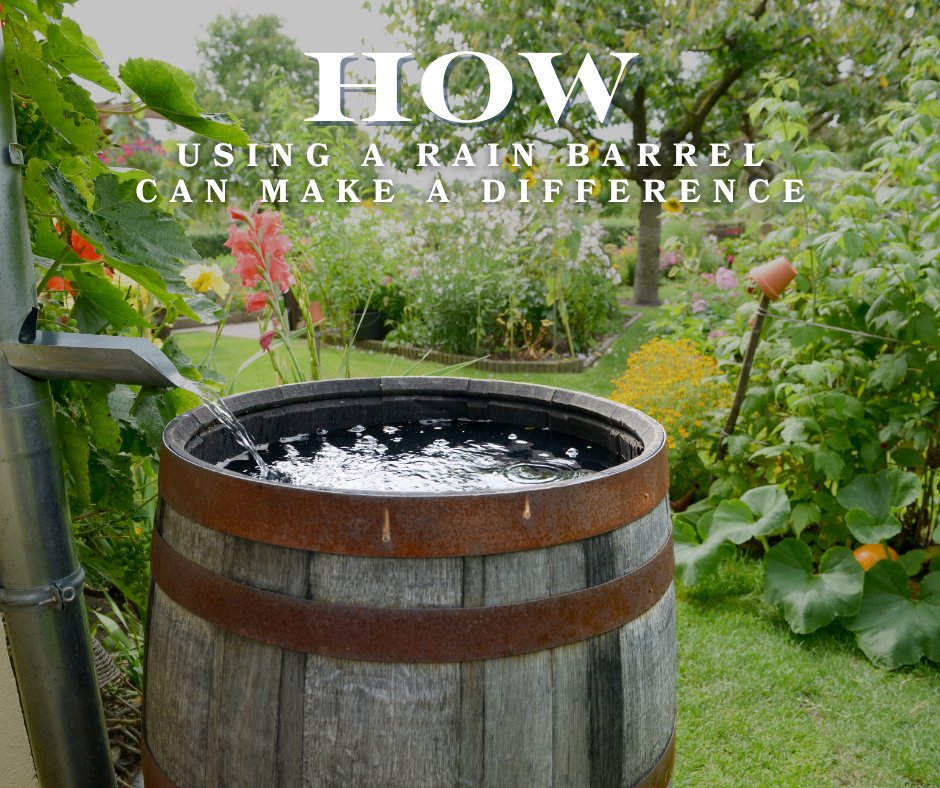
How using a rainbarrel make a difference.

  • Rain barrels reduce surface runoff water pollution by capturing and containing rainwater, decreasing the total amount of runoff water.
  • Less runoff means water can seep back into the ground slowly, reducing the amount of polluted water that runs into rivers and streams, which ultimately conserves bodies of water.
  • Average roof collects 600 gallons of water for every inch of rain.
  • Capturing some of that stormwater could play an important role in protecting our freshwater resources.
  • Rain barrels are one simple first step that can set small business owners, schools, home owners, and corporations down the path of freshwater conservation.
  • Rain barrels can not only help save money on municipal water bills but they can also reduce erosion and flooding caused by turbulent stormwater runoff.

Collecting rainwater in barrels is a cheap and easy way to reduce stormwater runoff.

Some other options for a one-inch rain event, even on a small 8′ x 10′ roof area can fill up 50 gallon rain barrel–that is a lot of water that does not become runoff.

Rain barrels range in size from 30 gallon to 100 gallon containers.

Installing them is easy and requires no special tools to set up at your business, home, or school.

There are numerous tutorials and guidelines available online that can answer specific questions and provide creative ideas on how to decorate your barrel to make it visually attractive.

So what can you do with all this rainwater that collects in the barrels?

Water your plants, water a composter, or wash your car to repurpose the water.

If you’ve collected more water than you can use, just release it on a sunny day when the ground is dry and the water will be absorbed. Plants will love this water! Using this recovered water for landscaping helps conserve potable water and will result in money savings.

Interested in learning more? Here are some additional resources:

The Texas Rainwater Harvesting Manual 3rd edition.

Texas Guide to Rainwater Harvesting – 2nd edition.

RainWater Blog sitemap https://rainwater.blog/sitemap/ – For complete list of blog – topic wise.

Good luck with your rain barrel!

Last updated on 19th October 2025.
Categories
rainbarrel RainBarrelAssembly

Rainbarrel Tutorial: How to make a rain barrel.

How to make your own rain barrel step-by-step.

How to Make a Rain Barrel in 5 Easy Steps. Last edited on September 20, 2023.

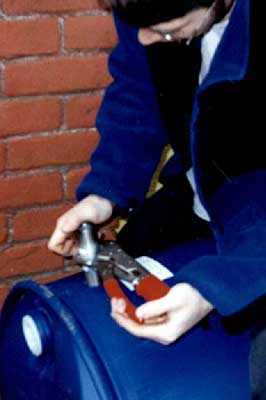
Step 1: Drill three of four holes in the barrel.  One of these is for the bibet to connect your garden house to the barrel and the other fittings will allow you to add more barrels in the future.  One of the barrels must have an overflow fitting near the top of the barrel.  If you plan on using 3/4 inch fittings use a 1 inch hole saw to cut the holes.  If you have an adjustable hole saw make it a little smaller than 1 inch.

Step 2:  Place plumbers goop on a 3/4 inch nipple. Using a 3/4 inch galvanized metal nipple and some locking pliers, thread nipple into the barrel. the hole for the fitting.  Place Plumbers goop or some other adhesive on the thread.

Step 3: Now the real fun part.  Cut the down spout at the proper height.  You should place the rainbarrel on one or two concrete blocks and then determine the proper height.  After cutting the down spout attach the necessary elbows and extensions to have the down spout reach the barrel.  I still am trying to create a non ABS or PVC way to divert the first couple of gallons after each rainfall (this will keep the sediment from clogging up the screen).  Attach a 4 inch by 2 inch ABS plastic converter to the end of the down spout and attach a fine mesh screen over the converter (you can use a paint sprayer filter which you can get at a hardware store). 

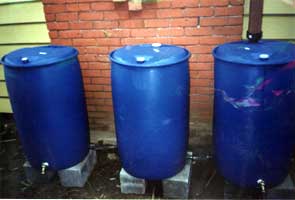
Step 4: If you are adding more barrels do this now.  Attach a garden hose Y fitting on the 3/4 inch nipples.  Position the barrels on top of the concrete blocks and cut the right length of garden hose to connect the barrels (with male fittings attached to both ends). 

Step 5: The final product.  You must attach an overflow line on the first barrel (the one on the far right in this picture).  This must be placed near the top of the barrel and it should be attached to some form of hose or tube to discharge any overflow.   Please note that you must remove one of the two bung fittings on the top of the barrel and cover it with a small screen.  I used the paint sprayer filter with a rubber-band to hold it in place.

Further reading & source: http://www.rwh.in/howto.html
Rainfall (in.) x Collection Area (sq. ft.) x 0.6233= water discharged (gallons)

Additional Resources : https://www.bhg.com/gardening/design/projects/how-to-make-rain-barrel/

Easy to assemble rainbarrel using Garden Water Saver products (www.gardenwatersaver.com) Complete rain barrel construction kit: https://gardenwatersaver.com/product/rain-barrel-kit-3×4/

FREQUENTLY ASKED QUESTIONS – PDF format with hyperlinks

,

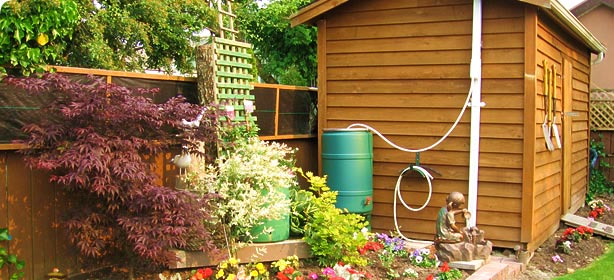
Capturing #rainwater with a #rainbarrel requires nothing more than a simple diverter. It’s not potable, but great for watering the pollinator gardens and shrubs. Source: https://twitter.com/EcofriendlyBeer/status/1691069478933495808