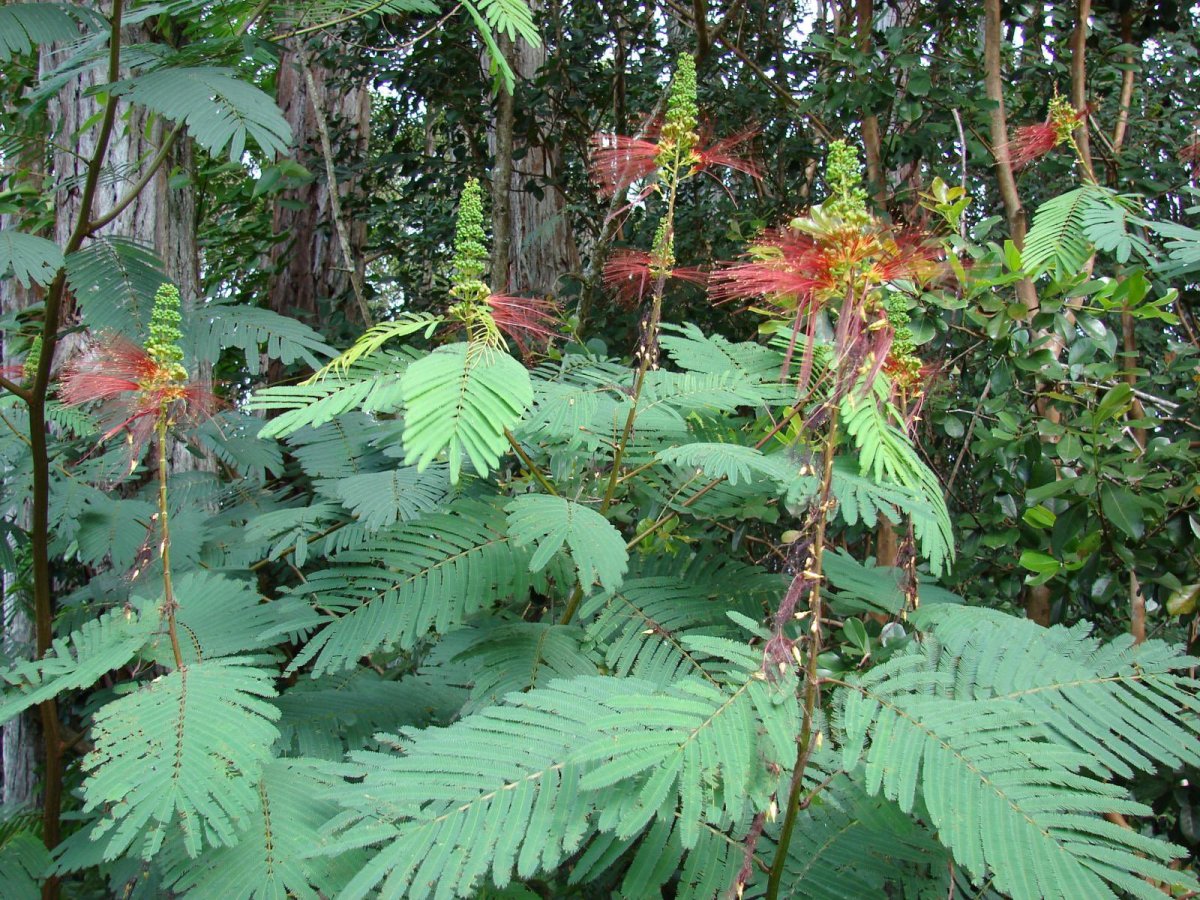
Basic Information – Calliandra calothyrsus
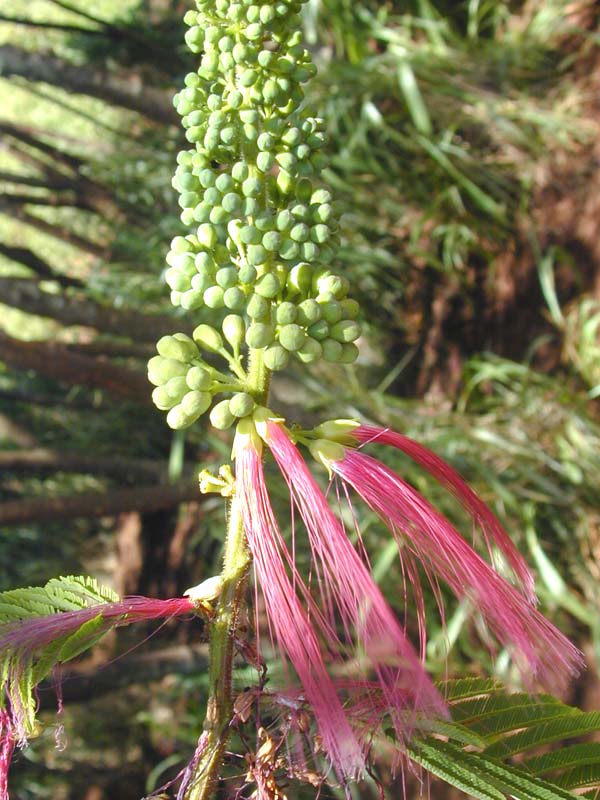
Calliandra callothyrsus is a small leguminous tree or large shrub in the family Fabaceae.
It is native to the tropics of Central America. It is not very drought-tolerant, and the above-ground parts can be short-lived in case of severe drought lasting many months, but the roots regularly resprout.
It is a multipurpose legume tree that can improve the soil by fixing nitrogen from the atmosphere.
It is easily grown from seed; growth is slow at first but speeds up after the first year. It is used for reforestation, provides soil stabilisation on sloping sites.
It provides useful high-quality fodder for livestock.
It can be regularly coppiced to provide firewood.
Because of these features, it has been planted in other parts of the tropics.
It is not having many features of typical invasive trees and naturally grows in disturbed areas, not maturing forests.
Farmers, plant calliandra trees on your farm for a more fruitful and sustainable future! #calliandra #agroforestry #conservationagriculture #biodiversityprotection
Calliandra calothyrsus is adapted to different types of soils and more tolerant to depleted, low-phosphorus, acidic soils than other fast-growing fodder tree legumes. The best growing conditions are on light textured, slightly acidic soils but it is also well adapted to acidic soils with poor soil fertility and is able to grow on infertile and compacted soils.[8].
Why should you grow Calliandra calothyrsus on your farm?
1. It is a legume that fixes nitrogen. This has the potential to boost soil fertility while reducing the requirement for chemical fertilizers.
2. Calliandra leaves are a high-protein animal feed.
3. Control of soil erosion.
4. A vital source of food and shelter for a wide range of wildlife.
5. The trims after drying are used as fuel.(Wikipedia)
https://twitter.com/GagaUwera/status/1703693915914645740
 Raincentre's Blog