A Visual Journey into Santhal Life
A pdf guide on Santhal village life – house plan and mud house repairing. Download from link below.
Key features of a traditional Santhali house.
Key features of a traditional Santhali house:
Traditional Santhali houses, or orah, are noted for their artistic wall designs and use of natural materials.
Layout:
- Rectangular shape: Santhal homes are typically rectangular and divided into specific areas.
- Cardinal directions: Directions have cultural significance. The northern part is the “birth part,” the southern is the “death part,” the eastern references the sun, and the western the moon.
- Separate sections: A house will typically have a specific place of worship (Bonga Orah), a bedroom (Gitich Orah), and a cowshed (Gora Orah). The kitchen (Daka Orah) is sometimes found as a separate structure or section.
- Village street: Homes are often constructed on both sides of a wide village street.
Construction materials:
- Walls: Made of mud mixed with cow dung and husks. The mud plaster is a key element for the decorative wall art.
- Roof: Traditionally thatched with long grass found in forests or straw. Due to modernization, some homes now have tin roofs.
- Floor: Plastered with a mud and cow dung mixture.
Wall art:
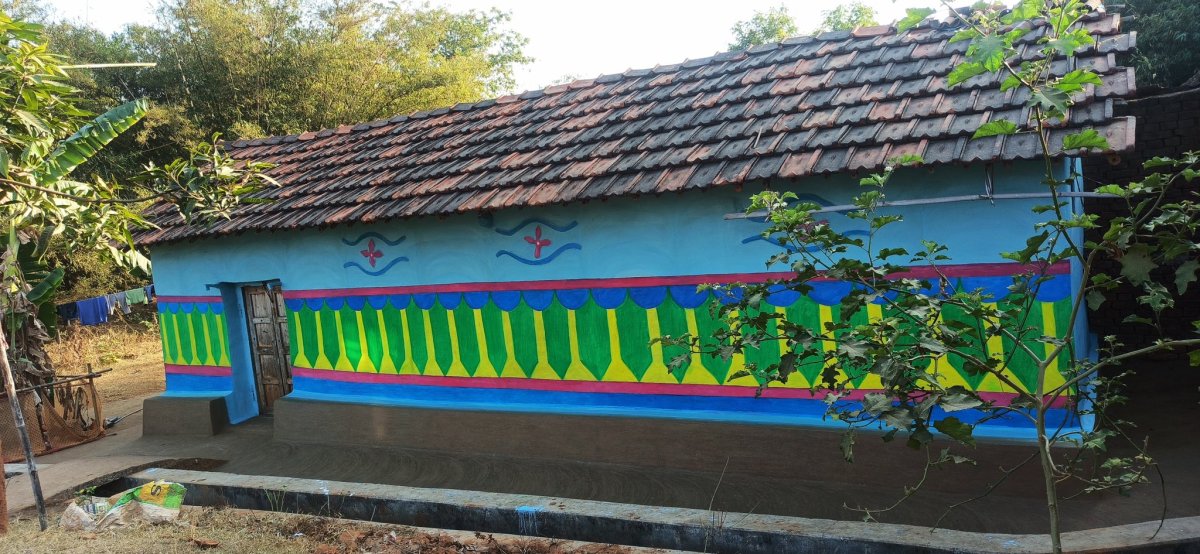
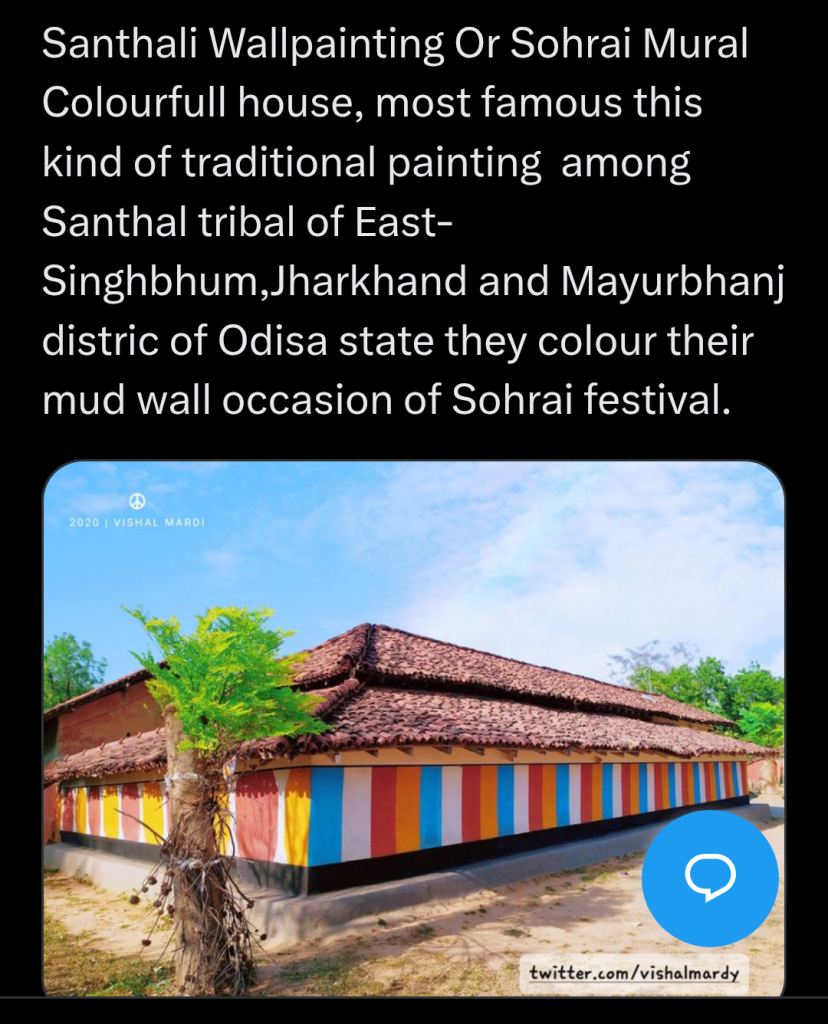
- Decorative paintings: Santhali houses are famous for their colorful wall paintings, which feature geometric patterns, floral motifs, and figures of animals and birds.
- Embossed designs: Another technique involves creating bas-relief designs using layers of clay.
- Sohrai art: A specific style of wall art, often monochromatic, is made during the Sohrai festival. Cream-colored earth is layered over a black undercoat, and designs are etched to reveal the patterns.
Blogs sitemap: https://rainwater.blog/sitemap/
 Raincentre's Blog