Hokkaido, Japan’s northernmost main island (latitudes roughly 41–45°N), features a cold climate with long, snowy winters, short frost-free periods (often just 4–5 months of viable growing time), and average annual temperatures around 5–8°C. Summers are brief but can include sudden cold snaps that damage crops. Rice, a warm-season crop, faces a narrow cultivation window—typically starting mid-May and needing to finish by early October—making every step a challenge.
Source: FEB 24: Cool climate rice: How Kamenoo saved the north – Sunflower Sake
| Hokkaido farmers’ dedication to rice cultivation, especially varieties like Nanatsuboshi, is a remarkable story of resilience against one of Japan’s harshest climates. The history and future of rice cultivation in Hokkaido >> Source: Browse by Subject – Passing on “The Japanese Experience” – Library – Institute of Developing Economies PDF copy download link: https://d-arch.ide.go.jp/je_archive/pdf/workingpaper/je_unu22.pdf |
Historical Challenges and Breakthroughs
Rice cultivation in Hokkaido began in the late 19th century during the Meiji era, but early efforts struggled with poor yields and frequent cold damage (crops hit by cold about once every four years historically). Farmers and researchers adapted through:
Breeding cold-tolerant, early-maturing varieties — Ancestral lines like Kamenoo helped lay the foundation for northern rice. Modern successes include Kirara 397 (developed in the 1980s), Yumepirika, and especially Nanatsuboshi.
Cultivation techniques — These include direct seeding (to leverage warmer water vs. air temps), protected seedling nurseries, precise fertilizer timing, and careful variety selection for quick ripening and cold resistance during flowering.
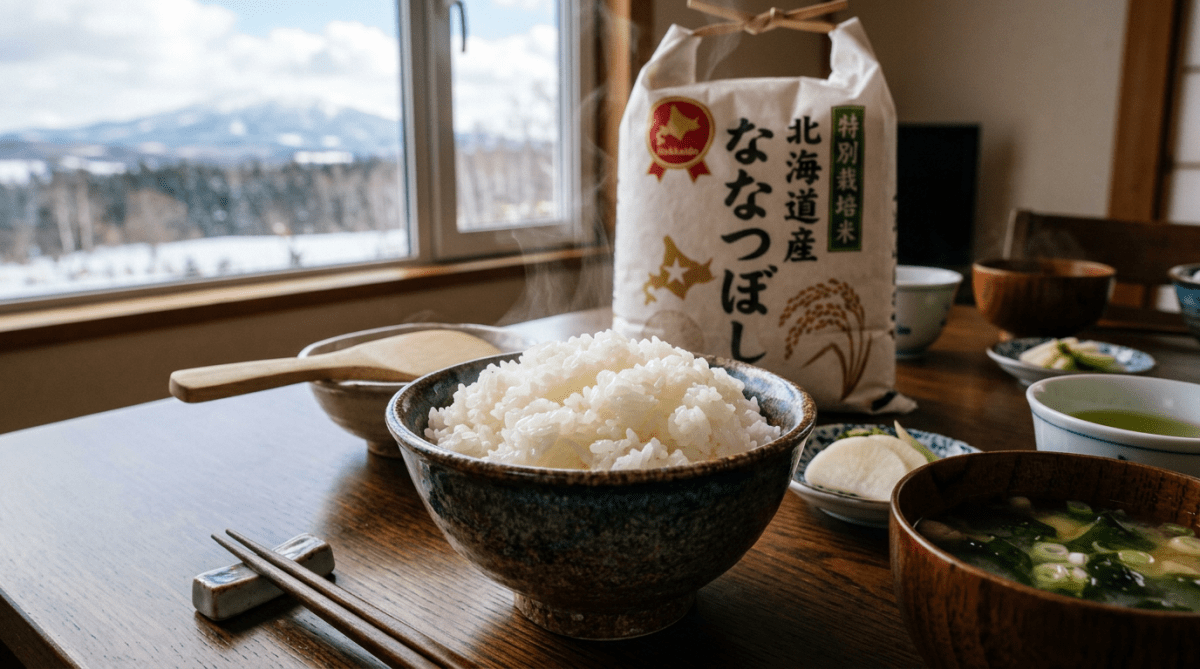
Nanatsuboshi (“Seven Stars,” named after the Big Dipper constellation visible in Hokkaido’s clear skies) was registered in 2001 at the Hokkaido Central Agricultural Experiment Station. It excels with strong cold resistance (especially at flowering), high yields, balanced qualities (luster, stickiness, sweetness, firmness), and excellent flavor retention even when cold—ideal for sushi, onigiri, and bento. It holds “Special A” rankings consistently and is grown exclusively in Hokkaido, often in areas like Asahikawa using pure snowmelt water. Source: https://thejapanesefoodlab.com/nanatsuboshi/
Thanks to these efforts, Hokkaido became Japan’s top rice-producing prefecture, with yields now averaging over 4 tonnes per hectare (comparable to the national average), transforming from marginal to premium rice. Source: https://www.dentsuprc.com/work/0036.html
The Farmers’ Hard Work
Saving the Grain: Japanese Rice in a World of Extreme Weather >>
https://www.facebook.com/nhkworld/videos/saving-the-grain-japanese-rice-in-a-world-of-extreme-weather/916616497597653/ Farmers endure heavy snow (up to 10+ meters in places), icy springs for planting, risk of summer chills, and labor-intensive cycles. They manage large-scale fields with meticulous care: monitoring temperatures, protecting seedlings, optimizing irrigation from snowmelt, and harvesting in tight windows. Innovations like climate-adapted breeding and sustainable practices (e.g., reducing chemicals) help combat extreme weather while lowering emissions.
This hard work produces sweeter, more flavorful rice attributed to the cool climate, ample sunlight, and pure water—qualities that let varieties like Nanatsuboshi compete with or surpass warmer-region rices in taste tests. https://www.doughandgrocer.com/hokkaido-rice/.
Hokkaido rice showcases human ingenuity, scientific breeding, and generational perseverance—turning a “impossible” environment into a source of world-class grain. If you’re enjoying Nanatsuboshi, you’re tasting that dedication!
Thankyou @Grok & @X for the collabrations.

