Crop Rotation on Organic Farming
Learn #CropRotation from Twitter Notes by GagaUwera
https://twitter.com/search?q=gagauwera%20crop%20rotation&src=recent_search_click
Crop Production Manual and Crop Roation PDF guide by FAO
Crop rotation (Page 19 & 20 of 92) – Those of us who have been gardening for years all have a story about a bumper crop one year leading to a minuscule harvest the next.
Bountiful plants followed by punier versions is a very common tale among gardeners, and the culprit isn’t the
validity of your (or our) green thumb – the answer to fighting this boomand-slump cycle is crop rotation.
Crop rotation is, essentially, an extension of the work you did in initially laying out your garden, and deciding where to plant what.
Moving the plant groups that you have placed together to new locations – and new soil – every year is something that some gardeners don’t do, but it can be a huge improvement
to nearly any garden, in several ways.
First of all, rotating crops year after year helps to keep that soil that we spent so much time worrying about
healthy and fertile. By planting the same plants in the same soil each year, those same plants are going to drain the same nutrients – in the same way – year after year, and over
time that soil will become less effective.
Additionally, rotating your plant groups helps to mitigate soil diseases and pests mainly nematodes.
What are those? These are conditions like verticillium wilt and rootworms that prefer certain types of plants – so planting the same thing in the same location each year helps them set up a permanent foothold.
It is recommended that crop locations are rotated to a different plant family after each planting over two years.
Some examples are as follow:
Night Shade: Tomato, Eggplant, Pepper
Morning Glory: Sweet Potato
Legumes-Bean: Long Beans, Wing Beans
Crop Roation by Abilu Tangwa
Did you know that crop rotation can play a vital role in mitigating climate change impacts? By switching crops every year, we can improve soil health, reduce greenhouse gas emissions, and save water. Let’s adopt this sustainable practice for a healthier planet.
#CropRotation by @AbiluTangwa .
-
Different Components of Rainwater Harvesting System
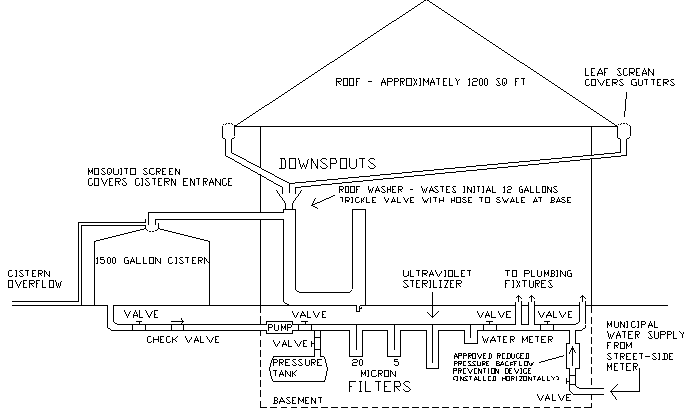
Basic Components: Regardless of the complexity of the system, the domestic rainwater harvesting system comprises six basic components: #1 Catchment surface: the collection surface from which rainfall runs off#2 Gutters and downspouts: channel water from the roof to the tank#3 Leaf screens, first-flush diverters, and roof washers: components which remove debris and dust from the…
-
So Just How Much Rain Can I Collect?
The amount of rainfall that you can collect is governed by the following formula: Easy to Remember Formula: 1″ of rain x 1 sq. ft. = 0.623 gallons. 1″ of rain x 100 sq. ft. = 62.3 gallons. 1″ of rain x 1000 sq. ft. = 623 gallons. To calculate the amount of rainwater you…
-
Damning analysis discovers US tap water is a ‘cocktail of chemicals’

Tap water across the US is riddled with chemical contaminants and even radioactive material, a new study has shown, with the situation complicated by outdated safety standards. The worrying state of American tap water was highlighted in recent analysis by the Environmental Working Group (EWG), a non-profit organization based in Washington, DC that has maintained…
 Raincentre's Blog