Different Components of Rainwater Harvesting System
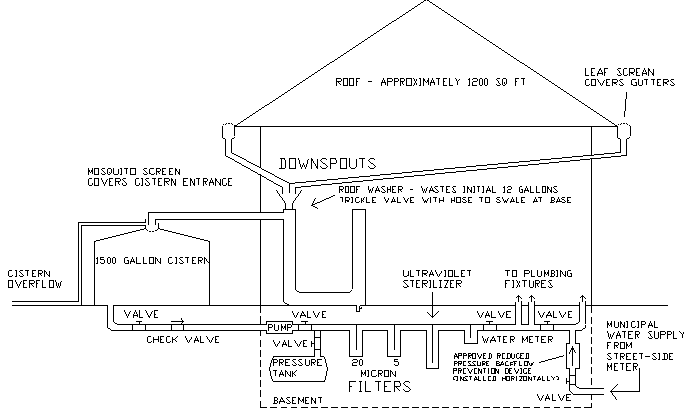
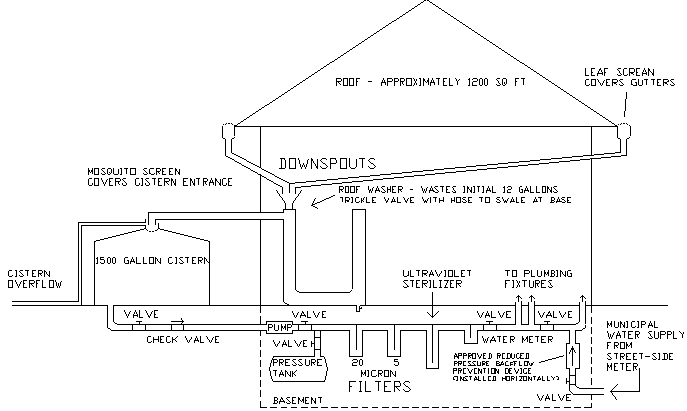
Basic Components: Regardless of the complexity of the system, the domestic rainwater harvesting system comprises six basic components:
#1 Catchment surface: the collection surface from which rainfall runs off #2 Gutters and downspouts: channel water from the roof to the tank #3 Leaf screens, first-flush diverters, and roof washers: components which remove debris and dust from the captured rainwater before it goes to the tank #4 One or more storage tanks, also called cisterns #5 Delivery system: gravity-fed or pumped to the end use #6 Treatment/purification: for potable systems, filters and other methods to make the water safe to drink.
Homepage: http://www.rwh.in/ Rainwater harvesting is the capture, diversion, and storage of rainwater for a number of different purposes including landscape irrigation, drinking and domestic use, aquifer recharge, and stormwater abatement.
In a residential or small-scale application, rainwater harvesting can be as simple as channeling rain running off an unguttered roof to a planted landscape area via contoured landscape. To prevent erosion on sloped surfaces, a bermed concave holding area down slope can store water for direct use by turf grass or plants. More complex systems include gutters, pipes, storage tanks or cisterns, filtering, pump(s), and water treatment for potable use.


 Raincentre's Blog